Wholesale Vape Supplier Colorado: What Retail Businesses Need to Know
Businesses searching for a reliable Wholesale Vape Supplier Colorado option are operating in a market that requires careful attention to compliance, documentation, inventory control, product traceability, and responsible retail practices. Vape products are not treated like ordinary consumer merchandise. They exist within an age-restricted and heavily regulated product category, meaning Colorado retailers must consider much more than price, product availability, or delivery speed when building a wholesale relationship.
For retailers, the process of selecting a wholesale supplier should begin with verification. A professional supplier relationship should provide clear business information, accurate invoices, recognizable manufacturer details, reliable order documentation, and transparent shipping procedures. Retailers should understand exactly where products are coming from and how they move through the supply chain before reaching the point of sale.
This matters because an unclear or poorly documented supply chain can create operational and regulatory problems. Inventory discrepancies, product recalls, damaged shipments, manufacturer notices, changing legal requirements, and inaccurate product records can all become more difficult to manage if the retailer does not have a structured procurement system.
Colorado businesses also need to understand that federal regulations may apply alongside state and municipal requirements. Rules involving age restrictions, licensing, taxes, shipping, marketing, packaging, flavor restrictions, and product eligibility can vary or change over time. For that reason, choosing a Wholesale Vape Supplier Colorado business should be approached as part of a larger compliance and risk-management process.
A retailer should never assume that simply obtaining a product from a wholesaler automatically makes that product appropriate for sale. Each business remains responsible for understanding the legal requirements applicable to its own operation, location, and inventory.
Understanding the Wholesale Vape Supply Chain
The wholesale vape supply chain generally connects manufacturers, importers, authorized distributors, wholesalers, and retail stores. Each stage of this chain can affect product authenticity, documentation, inventory consistency, and accountability.
For Colorado retailers, understanding this chain is important because product provenance can matter if questions arise later. If a product is subject to a recall, manufacturer notice, packaging concern, or regulatory review, the retailer should be able to identify where that product came from and when it was received.
A well-managed wholesale supply chain usually includes accurate purchase orders, invoices, shipment records, product identifiers, manufacturer information, and contact details for the supplier. The retailer should be able to reconcile what was ordered against what was received and sold.
This may sound like a basic business practice, but it becomes especially important in regulated categories. Weak documentation can make even simple operational problems more difficult to resolve.
Retailers should therefore evaluate whether a prospective supplier has established processes for order confirmation, shipment tracking, invoice generation, damaged merchandise, returns, discontinued products, and product-related notifications.
Why Supplier Verification Matters
Supplier verification should be one of the first steps when a Colorado retailer evaluates a wholesale source.
Retailers should confirm that the supplier operates as a legitimate business and can provide relevant commercial information. This may include the supplier’s business name, contact details, invoicing information, return procedures, customer service process, and applicable documentation.
Businesses should be cautious when supplier information is incomplete or inconsistent. Vague invoices, unclear product descriptions, unusually low prices, missing manufacturer details, or difficulty identifying the source of products may warrant additional review.
A responsible retailer should also compare supplier documentation against the physical products being delivered. Product names, quantities, packaging, model numbers, and other identifying information should align with purchase records.
The objective is to establish a clear and auditable purchasing process.
Product Traceability in Vape Wholesale
Product traceability refers to the ability to track inventory from the supplier to the retailer and, where applicable, through internal inventory systems.
For businesses looking into a Wholesale Vape Supplier Colorado, traceability should be a key consideration because it supports inventory management and accountability.
Retailers should retain information such as:
- Supplier name and contact information
- Purchase date
- Invoice number
- Product name
- Product quantity
- SKU or model number
- Manufacturer or brand
- Shipment date
- Delivery confirmation
- Return or replacement records
When retailers maintain complete purchasing records, it becomes much easier to identify affected inventory if a problem emerges.
For example, if a manufacturer issues an important product notice, the retailer can search purchase history and determine whether the affected item is currently in stock.
This is significantly more effective than relying on memory, informal messages, or incomplete transaction histories.
Authenticity Checks and Product Verification
Product authenticity is another important consideration within the wholesale vape industry.
Retailers should establish procedures for checking product packaging, labeling, manufacturer identification, batch information, verification codes, or other security features that may be provided.
Not every product uses the same verification method, so retailers should understand the authenticity procedures recommended by specific manufacturers.
Packaging inconsistencies, spelling mistakes, poor print quality, missing identifiers, damaged seals, or major differences between expected and delivered products may justify additional investigation.
Retailers should also avoid assuming that professional-looking packaging automatically proves authenticity. Documentation and supplier credibility remain important.
A trustworthy supply relationship should give the retailer enough information to understand the source of the products being delivered.
Federal Regulation and the Vape Industry
Vaping and electronic nicotine delivery systems are subject to federal regulation in the United States.
Retailers, distributors, manufacturers, and importers may have different responsibilities depending on their role in the supply chain.
Federal law establishes 21 as the minimum age for the sale of tobacco products, including covered vapor products. Retailers must therefore maintain appropriate age-verification procedures.
Businesses should also monitor current guidance from relevant federal authorities regarding product authorization, labeling, marketing, manufacturing, and distribution.
The regulatory environment can change, so retailers should avoid relying on old information, social media posts, forum discussions, or secondhand industry statements when making compliance decisions.
Official sources should be reviewed regularly.
Colorado Vape Retail Regulations
Colorado retailers may also be subject to state requirements involving tobacco and nicotine products.
Depending on the business and location, relevant topics may include licensing, taxation, product sales, age restrictions, recordkeeping, delivery procedures, and local rules.
Retailers should verify current requirements before making purchasing or stocking decisions.
It is important to understand that state-level compliance does not necessarily mean every municipality follows identical rules.
Different cities or counties may adopt additional restrictions or licensing requirements.
A retailer operating in multiple Colorado locations should therefore review the rules applicable to each location rather than assuming a single statewide policy covers every situation.
Local Rules Can Vary Across Colorado
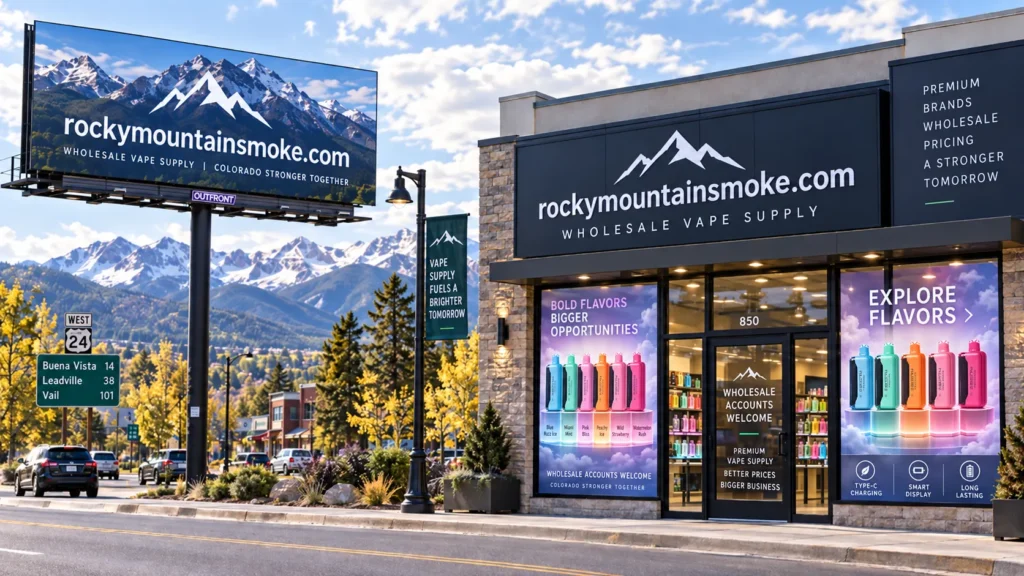
Colorado includes many different municipal jurisdictions, and local regulations can differ.
A vape retailer in Denver may face different requirements than a business in Colorado Springs, Aurora, Fort Collins, Pueblo, or another community.
Local governments may regulate matters such as licensing, zoning, flavored products, retail proximity, advertising, or other issues.
Because these rules may change, retailers should regularly review municipal and county requirements.
A strong wholesale relationship does not eliminate this responsibility.
The retailer remains responsible for ensuring that products sold at a specific location comply with the requirements applicable to that location.
Age Verification and Responsible Retailing
Age verification is one of the most important responsibilities for retailers selling vaping products.
Businesses should have clear policies for checking identification and preventing sales to underage customers.
Staff members should receive appropriate training so they understand store procedures and know how to handle questionable identification.
Retailers should also establish clear management procedures for situations where a sale must be refused.
Age-restricted retailing is not only a legal responsibility but also an important part of responsible business operations.
Online or remote transactions, where permitted, may involve additional age-verification and delivery requirements. Retailers should understand the rules that apply before offering these transaction methods.
Inventory Management for Vape Retailers
Efficient inventory management can reduce operational errors and improve accountability.
Vape retailers often carry multiple products with similar names, packaging styles, flavors, device versions, or nicotine concentrations. Without a structured inventory system, mistakes can occur easily.
Retailers should assign accurate SKUs and maintain organized product categories.
Inventory software may help businesses monitor:
- Products received
- Products sold
- Products returned
- Damaged products
- Missing stock
- Low-stock items
- Discontinued products
- Product variations
Regular stock counts can help identify discrepancies between recorded inventory and physical inventory.
Businesses should investigate repeated discrepancies rather than treating them as routine.
Why Accurate SKUs Matter
A well-designed SKU system makes inventory management significantly easier.
Products with similar packaging may still represent different models, flavors, strengths, or formats.
If employees rely only on the product name or packaging color, inventory errors can occur.
A unique SKU allows each product variation to be identified accurately.
Retailers can also use SKUs to improve purchasing decisions, monitor product turnover, and identify slow-moving inventory.
This becomes increasingly important as a store’s product catalog grows.
Wholesale Ordering and Purchase Planning
Retailers should develop a structured purchasing process rather than ordering products based solely on short-term demand.
Purchase planning can include reviewing historical sales, current stock levels, expected demand, seasonal changes, storage capacity, and regulatory considerations.
Businesses should avoid overstocking items that may become difficult to sell or subject to future restrictions.
Retailers should also understand minimum-order policies, delivery schedules, lead times, and supplier availability.
Clear purchase planning can improve cash flow while reducing excessive inventory.
Delivery and Logistics Across Colorado
Colorado’s geography can create unique logistics challenges.
Retail businesses may operate in large urban centers, suburban communities, mountain towns, or rural areas.
Delivery times and shipping conditions may therefore vary significantly.
A Wholesale Vape Supplier Colorado relationship should include clear information about shipment processing, carrier procedures, tracking, delivery documentation, and damaged-shipment handling.
Retailers should inspect incoming shipments promptly.
This inspection should verify the number of cases or units received, product condition, packaging integrity, and alignment with the purchase order.
Any discrepancy should be documented immediately.
Handling Damaged or Incorrect Shipments
Even professional supply chains occasionally experience shipping problems.
Retailers should therefore understand a supplier’s procedures for dealing with damaged, missing, or incorrect merchandise.
Businesses should document problems using photographs, delivery records, invoice numbers, and product details.
The supplier should be contacted promptly according to the agreed process.
Retailers should avoid placing questionable or damaged inventory into regular stock before the issue is resolved.
Clear receiving procedures can prevent damaged merchandise from reaching customers unintentionally.
Product Storage and Warehouse Management
Storage conditions can influence product quality and operational safety.
Retailers and wholesalers should follow manufacturer guidance concerning temperature, humidity, sunlight exposure, and physical storage where applicable.
Inventory should be organized in a manner that allows easy inspection and rotation.
Older inventory can be positioned so it is reviewed before newer stock, when appropriate.
Damaged or quarantined products should be separated clearly from sellable inventory.
Warehouse staff should be able to distinguish between active inventory, returned merchandise, damaged goods, and products awaiting review.
Managing Product Recalls and Notices
A strong inventory system becomes especially useful when manufacturers or regulators issue product notices.
Retailers should establish a process for monitoring relevant announcements.
If a product requires review or removal, staff should be able to identify affected inventory quickly.
The business should retain records of actions taken, including dates, quantities, supplier communications, and disposal or return procedures where applicable.
This process can help demonstrate that the retailer responded appropriately.
Recordkeeping for Vape Wholesale Purchases
Detailed recordkeeping supports both everyday business operations and regulatory compliance.
Retailers should organize purchase records systematically.
Documents may include:
- Supplier invoices
- Purchase orders
- Shipment records
- Payment confirmations
- Delivery receipts
- Product documentation
- Return records
- Supplier correspondence
Digital records should be backed up appropriately.
Businesses should also establish consistent file naming systems to make information easy to retrieve.
For example, invoices might be organized by supplier name, year, and invoice number.
How Long Should Retailers Keep Records?
The appropriate record-retention period can depend on tax, accounting, regulatory, legal, and operational considerations.
Businesses should verify applicable requirements with qualified professionals or relevant authorities.
It is generally good practice to retain important supplier and inventory records long enough to support audits, tax reporting, warranty issues, or product investigations.
Deleting records too quickly can create problems if questions arise later.
Supplier Communication and Customer Support
Communication is an important but sometimes overlooked factor when selecting a wholesale supplier.
Retailers should determine how the supplier handles questions about invoices, inventory, shipment delays, product information, returns, and documentation.
Clear communication can save considerable time.
A supplier should also provide accurate information rather than making unsupported claims.
Retailers should be cautious if product questions are answered inconsistently or if documentation requests are repeatedly ignored.
Evaluating Supplier Reliability
A reliable supplier relationship is based on consistency.
Retailers may evaluate suppliers using operational factors such as:
- Order accuracy
- Shipment consistency
- Invoice quality
- Documentation
- Communication
- Product traceability
- Return procedures
- Customer service
- Responsiveness to problems
Price can be one factor, but it should not be the only factor.
The cheapest supplier may not necessarily provide the best overall value if operational problems create additional costs.
The Importance of Clear Invoices
Invoices are a central part of wholesale purchasing.
A good invoice should clearly show the supplier, retailer, date, invoice number, products, quantities, and pricing.
Product descriptions should be specific enough to identify the merchandise.
Vague descriptions such as “assorted products” can create difficulties later.
Accurate invoices can support bookkeeping, tax reporting, stock reconciliation, returns, and compliance reviews.
Wholesale Pricing and Business Planning
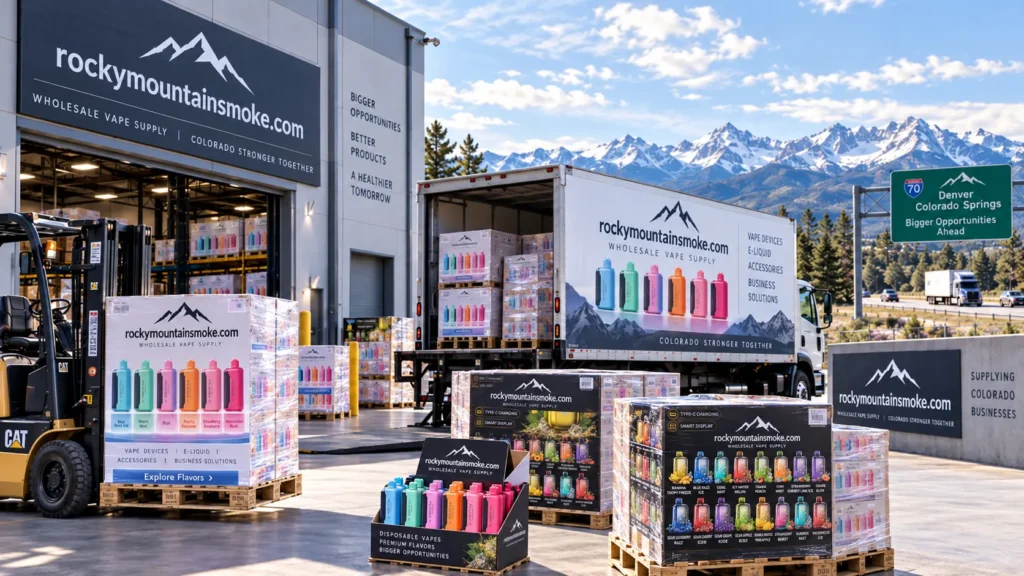
Retailers often compare wholesale prices when evaluating suppliers.
However, price comparisons should account for more than the unit cost.
Businesses should also consider shipping, minimum order requirements, damaged goods, returns, payment terms, inventory turnover, storage costs, and administrative effort.
A product that appears cheaper initially may create higher total costs if fulfillment is unreliable.
Retailers should evaluate total operational value rather than focusing only on headline pricing.
Understanding Minimum Order Quantities
Some suppliers may establish minimum order quantities or order-value thresholds.
Retailers should determine whether these requirements align with their business size and inventory needs.
Ordering too much stock simply to meet a wholesale threshold can create unnecessary cash-flow pressure.
Businesses should consider storage capacity and realistic demand.
Responsible inventory planning reduces the risk of holding excessive stock.
Inventory Turnover and Stock Performance
Retailers should monitor how quickly products move through inventory.
Inventory turnover data can help businesses understand which products require frequent replenishment and which products remain unsold.
Slow-moving products may tie up working capital and storage space.
Businesses can use sales reports to make more informed purchasing decisions.
This creates a more disciplined wholesale ordering process.
Product Catalog Management
A retailer’s product catalog should be kept accurate.
Discontinued products, renamed products, changed packaging, and new versions should be updated in the inventory system.
Retail staff should not rely solely on memory when identifying products.
Regular catalog maintenance can improve customer service and reduce fulfillment mistakes.
For multi-location businesses, centralized catalog management may provide additional consistency.
Employee Training and Wholesale Operations
Employees involved in receiving, stocking, or selling vape products should receive appropriate training.
Training may include:
- Age verification
- Inventory procedures
- Product identification
- Receiving shipments
- Damaged goods
- Store policies
- Documentation
- Refused sales
Management should document training procedures where appropriate.
New employees should understand that age-restricted inventory requires careful handling.
Online Vape Retail Considerations
Retailers considering online sales should review applicable laws carefully.
Remote transactions may involve additional age-verification, shipping, carrier, labeling, and delivery requirements.
Businesses should not assume that rules applying to in-store sales automatically apply in the same way to online sales.
Local restrictions may also affect delivery.
Professional legal or compliance guidance may be appropriate before implementing online sales systems.
Marketing and Advertising Considerations
Marketing for age-restricted products requires careful judgment.
Retailers should review applicable advertising rules and avoid marketing practices that could appeal primarily to minors.
Product claims should also be accurate and supported.
Businesses should not make health or safety claims without appropriate legal and regulatory basis.
Responsible marketing protects both the retailer and consumers.
Data and Inventory Security
Retail operations increasingly rely on digital systems.
Businesses should protect inventory records, supplier information, invoices, payment details, and customer information where applicable.
Access to administrative systems should be limited to authorized employees.
Strong passwords, account controls, backups, and appropriate software updates can reduce operational risks.
Data security is part of professional business management.
Building a Supplier Evaluation Checklist
Retailers can make supplier selection more consistent by creating a standardized evaluation checklist.
The checklist might review:
- Business legitimacy
- Product documentation
- Invoice quality
- Authenticity procedures
- Shipping reliability
- Returns
- Product traceability
- Communication
- Regulatory awareness
- Inventory availability
Each supplier can then be evaluated using the same criteria.
This reduces the likelihood of making purchasing decisions based only on informal impressions.
Questions to Ask a Wholesale Vape Supplier
Colorado retailers can ask several questions before beginning a supplier relationship.
They may ask:
- What product documentation is available?
- How are invoices structured?
- How are damaged shipments handled?
- How are product recalls communicated?
- What is the normal processing time?
- Are tracking details provided?
- How are returns handled?
- How are discontinued products communicated?
- What manufacturer information is available?
The objective is to understand the supplier’s operational process before relying on that supplier for significant inventory.
Warning Signs When Evaluating Suppliers
Retailers should pay attention to warning signs.
These may include:
- Incomplete invoices
- No verifiable business details
- Unclear product sources
- Packaging inconsistencies
- Unusually low prices
- Repeated shipment errors
- Poor communication
- Missing manufacturer information
- Refusal to provide basic documentation
A single issue may have a legitimate explanation, but repeated problems should be reviewed carefully.
Responsible Sourcing and Long-Term Business Stability
Responsible sourcing contributes to long-term retail stability.
Businesses that maintain documented supply chains are better positioned to respond to compliance changes, inventory issues, or supplier problems.
They can also make more informed purchasing decisions.
Strong sourcing practices may reduce operational disruption and improve internal accountability.
For Colorado retailers, wholesale purchasing should be viewed as an ongoing business process rather than a series of individual transactions.
Wholesale Vape Supplier Colorado for Multi-Location Retailers
Businesses operating multiple Colorado stores face additional inventory challenges.
Each location may require separate stock monitoring, sales analysis, receiving records, and compliance procedures.
Centralized purchasing can provide greater consistency, but individual store managers should still maintain accurate receiving and inventory records.
Businesses should also review local rules for every store location.
Multi-location retailers should avoid assuming that a product acceptable in one jurisdiction is automatically treated identically in another.
Forecasting Inventory Demand
Demand forecasting can improve wholesale purchasing.
Retailers can use historical sales information to estimate future inventory needs.
This can help prevent both excessive stock and frequent shortages.
Forecasting should consider seasonal trends, product changes, regulatory developments, and local demand.
Retailers should also maintain flexibility because consumer preferences can change quickly.
Inventory Audits
Periodic inventory audits help verify whether records match actual stock.
An audit may involve counting physical inventory, reviewing purchase records, comparing sales data, and investigating discrepancies.
Businesses should document the results.
Audits can reveal operational problems such as incorrect receiving, inaccurate data entry, damaged inventory, or internal loss.
Regular audits promote accountability.
Working With Accountants and Compliance Professionals
Professional advisers may play an important role in regulated retail operations.
Accountants can assist with tax records and financial reporting.
Attorneys or compliance professionals may help businesses understand regulatory requirements.
Retailers should seek qualified advice when legal requirements are unclear.
Wholesale suppliers can provide operational information, but they should not be treated as a substitute for professional legal advice.
Monitoring Regulatory Developments
Regulatory monitoring should be a routine business process.
Management should identify reliable sources and review them periodically.
Changes may affect:
- Product eligibility
- Taxation
- Licensing
- Marketing
- Shipping
- Packaging
- Age verification
- Flavor restrictions
- Recordkeeping
Businesses should document significant policy changes and update staff procedures as needed.
Creating an Internal Compliance Calendar
One practical way to stay organized is to create a compliance calendar.
This calendar may track license renewals, tax deadlines, employee training, internal audits, policy reviews, and regulatory updates.
Automated reminders can help prevent important deadlines from being missed.
For multi-location retailers, a centralized calendar may improve oversight.
Responsible Retail Culture
Compliance should not be treated as a one-time administrative task.
Retail businesses can benefit from creating a culture in which employees understand why procedures matter.
Managers should reinforce age-verification rules, inventory accuracy, responsible customer service, and documentation.
Employees should feel comfortable asking questions when they are uncertain.
A consistent culture can reduce avoidable mistakes.
Why Transparency Matters in Wholesale Relationships
Transparency builds trust between retailers and suppliers.
Retailers should receive clear information about orders, product availability, shipping, and documentation.
Suppliers should also communicate unexpected problems promptly.
A professional relationship is easier to manage when both parties keep accurate records.
Transparency reduces confusion and improves accountability.
Wholesale Vape Supplier Colorado and Long-Term Vendor Relationships
Some retailers prefer building long-term relationships with a smaller number of trusted suppliers.
This can create operational consistency.
However, businesses should continue reviewing supplier performance periodically.
A supplier that performed well in the past may experience changes in inventory, shipping, management, or documentation.
Periodic supplier reviews help ensure standards remain consistent.
Business Continuity Planning
Retailers should also consider how they would respond if a primary supplier suddenly became unavailable.
A basic continuity plan may identify alternative approved suppliers, emergency ordering procedures, and minimum inventory thresholds.
This does not mean businesses should overstock inventory.
Instead, the goal is to reduce dependence on a single operational point of failure.
Responsible Product Selection
Retailers should evaluate products carefully before introducing them into inventory.
Important factors can include regulatory status, manufacturer information, packaging, documentation, and customer suitability within applicable legal requirements.
Businesses should avoid purchasing products simply because they appear popular on social media.
Commercial demand should not replace proper evaluation.
Customer Questions and Product Information
Retail employees may receive questions about product ingredients, usage, specifications, or manufacturer information.
Staff should provide accurate information and avoid making unsupported medical claims.
When employees do not know the answer, they should refer to reliable product documentation rather than guessing.
Clear product information improves professionalism.
Managing Returns From Customers
Retailers should establish a clear return policy for age-restricted products.
Local laws, product condition, hygiene considerations, manufacturer warranties, and store policies may affect what can be returned.
Employees should understand these policies and apply them consistently.
Returned merchandise should be inspected before being returned to active inventory.
Waste and Disposal Procedures
Some products may require special handling when damaged, defective, expired, or otherwise unsuitable for sale.
Retailers should review applicable disposal rules and manufacturer guidance.
Products should not simply be discarded without considering environmental or regulatory requirements.
Businesses should document disposal procedures where appropriate.
Wholesale Vape Supplier Colorado: Building a Professional Procurement System
The most effective way for retailers to manage vape wholesale purchasing is to treat it as a formal procurement system.
That system should include approved suppliers, purchasing authorization, receiving procedures, inventory tracking, record retention, and periodic reviews.
Employees should understand who is authorized to place orders.
Purchase decisions should be documented.
A structured approach reduces errors and strengthens operational control.
Common Mistakes Retailers Should Avoid
Several mistakes can weaken wholesale operations.
One common mistake is selecting suppliers based only on price.
Another is failing to maintain complete invoices.
Retailers may also neglect local regulations or rely too heavily on supplier statements.
Other problems can include inconsistent inventory counts, poor age-verification training, unclear return procedures, and failure to monitor product notices.
These issues can often be reduced through stronger internal systems.
Why Documentation Protects Retailers
Documentation creates a record of business activity.
If an issue arises months later, employees may not remember the exact details of a transaction.
Written records provide objective information.
Good documentation may include purchase orders, invoices, shipping records, emails, product notices, and internal reports.
This helps businesses respond to questions efficiently.
Future of Vape Wholesale Distribution in Colorado
The vaping industry continues to evolve.
Retailers should expect ongoing changes in products, regulation, technology, and consumer behavior.
Wholesale relationships may also become more documentation-intensive as regulations evolve.
Businesses that establish organized systems now may find it easier to adapt later.
Flexibility, transparency, and compliance awareness will remain important.
Frequently Asked Questions About Wholesale Vape Supplier Colorado
What should I look for when evaluating a wholesale vape supplier in Colorado?
Retailers should evaluate business legitimacy, product documentation, invoice accuracy, traceability, shipment reliability, return procedures, communication, and regulatory awareness. Price should be only one part of the decision.
Why does product traceability matter?
Traceability helps retailers identify where products came from, manage inventory, respond to recalls, and investigate discrepancies.
What is the federal minimum age for vape sales?
Federal law establishes 21 as the minimum age for tobacco product sales, including covered vaping products.
Can Colorado cities have different vape rules?
Yes. Local requirements may differ, so businesses should review regulations for each city or county where they operate.
Should a retailer verify products even when buying from a wholesaler?
Yes. Retailers should maintain independent verification procedures and keep accurate supplier documentation.
How should wholesale invoices be organized?
Invoices should contain specific product descriptions, supplier details, dates, quantities, and invoice numbers. Businesses should maintain an organized digital or physical filing system.
Why is inventory management important for vape shops?
Accurate inventory management reduces ordering errors, helps identify missing stock, improves forecasting, and supports product traceability.
What should retailers do with damaged shipments?
Damaged products should be separated from normal inventory and documented. The retailer should follow the supplier’s established claim or return procedure.
How often should suppliers be reviewed?
There is no universal schedule, but periodic supplier reviews are good business practice. Retailers can evaluate reliability, documentation, communication, order accuracy, and overall performance.
Can retailers rely only on supplier information for compliance?
No. Retailers should independently review official regulatory information and seek professional guidance when necessary.
Choosing a Wholesale Vape Supplier Colorado Businesses Can Evaluate Responsibly
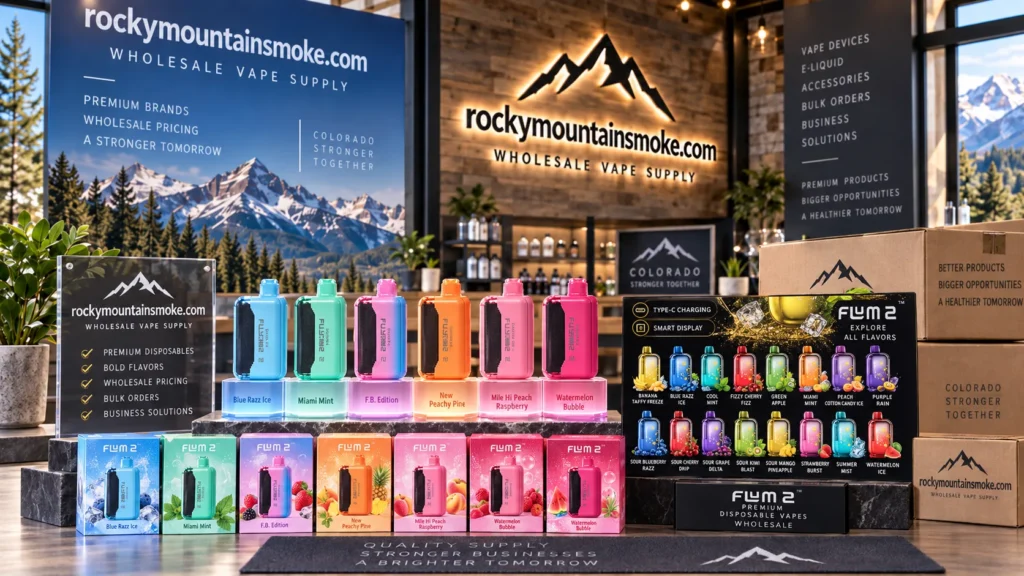
Searching for a Wholesale Vape Supplier Colorado solution should involve far more than comparing catalogs or pricing. Retailers operate within a regulated environment where product traceability, documentation, age verification, inventory controls, shipping procedures, local regulations, and responsible sourcing all matter.
A professional wholesale relationship should make it easier for the retailer to maintain accurate records and understand where products originate. Retailers should look for transparent supplier information, detailed invoices, reliable communication, consistent fulfillment, and clearly documented procedures.
Businesses should also maintain their own internal compliance processes. Supplier relationships should support responsible operations, not replace them.
Colorado retailers should regularly review federal, state, and local requirements because regulations may evolve over time. This is especially important for businesses operating multiple locations.
Ultimately, the strongest wholesale strategy is built around structured procurement, clear documentation, regulatory awareness, employee training, and careful inventory management.
Retailers researching the vape industry can use rockymountainsmoke.com as an informational resource while continuing to verify all applicable legal and regulatory requirements through authoritative sources.
A disciplined approach to sourcing helps businesses manage inventory more efficiently, respond more effectively to product issues, maintain better documentation, and operate with greater accountability in Colorado’s regulated retail environment.