Colorado Vape Laws 2026: Age Limits, Flavor Bans & Rules Explained
A comprehensive guide to Colorado vaping regulations, Denver's flavored tobacco restrictions, FDA rules, minimum purchase age, and important retail requirements.
Understanding Colorado vape laws 2026 is important for adults researching tobacco regulations and businesses operating in the state's regulated nicotine retail industry.
Colorado has statewide requirements governing tobacco and nicotine sales. However, individual cities may establish additional restrictions that affect which products retailers can legally sell.
Denver's flavored tobacco retail-sales ban is one significant regulatory development affecting the Colorado market in 2026.
This article from Rocky Mountain Smoke explains the key requirements and helps readers understand the differences between state, local, and federal vaping regulations.
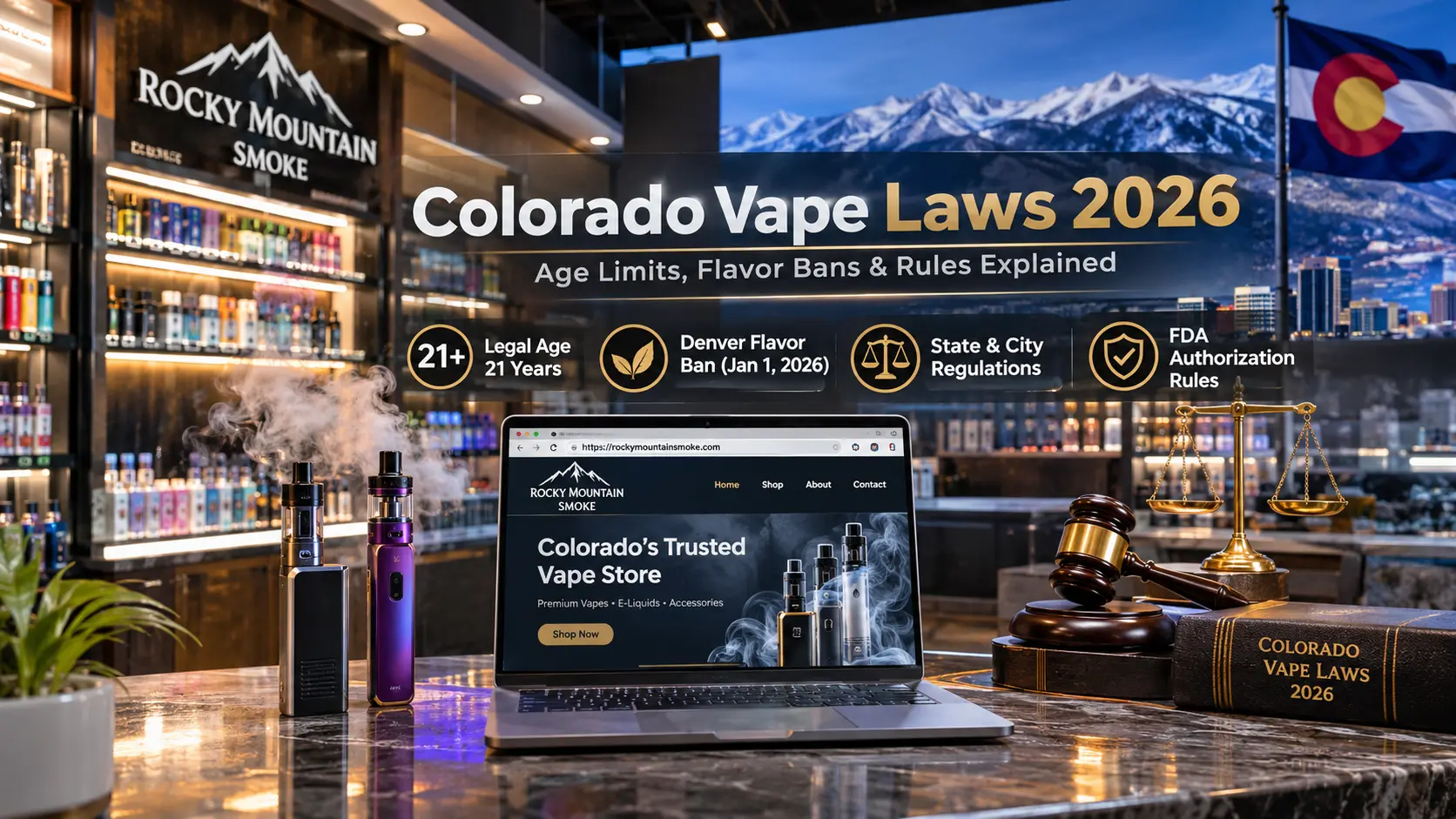
The minimum legal tobacco and nicotine sales age is 21. Colorado tobacco and nicotine retailers must maintain applicable licenses. Denver began enforcing its flavored tobacco retail-sales ban on January 1, 2026. FDA authorization requirements also apply to e-cigarette products.
Colorado Vape Laws 2026: Complete Overview
Colorado regulates electronic cigarettes, nicotine products, and tobacco retail activities through a combination of federal, statewide, and local laws.
The federal government establishes tobacco marketing requirements and the nationwide minimum sales age. Colorado imposes retailer licensing requirements and other state regulations, while municipalities may adopt additional restrictions.
Understanding these different legal layers is essential. A rule affecting Denver does not necessarily apply throughout Colorado, and a product being available from a retailer does not establish that its sale complies with federal law.
| Regulation | Colorado 2026 Requirements |
|---|---|
| Minimum purchase age | 21 years |
| Tobacco retail license | Applicable state license required |
| Denver flavored tobacco sales | Retail-sales ban enforced from January 1, 2026 |
| Federal product authorization | FDA marketing authorization requirements apply |
| Indoor vaping | Restricted in covered indoor locations |
| Municipal regulations | Vary depending on city and local ordinance |
What Is the Legal Age to Buy Vapes in Colorado?
The legal age to purchase tobacco and nicotine products in Colorado is 21 years. This requirement aligns with federal Tobacco 21 law.
Tobacco and nicotine retailers must comply with age-verification requirements. Businesses selling age-restricted products cannot legally complete a sale to someone under the minimum legal age.
The federal minimum sales age applies throughout the United States. Retailers should follow the current identification-check procedures prescribed by the FDA and applicable Colorado law.
Why Does Age Verification Matter?
Age verification is an essential component of responsible tobacco retailing. It helps prevent unlawful sales and supports compliance with licensing requirements.
Retail employees should receive appropriate training on verifying identification, recognizing invalid identification, and declining prohibited transactions.
Denver Flavored Vape Ban 2026: What Changed?
One of the most significant developments involving Colorado vaping regulations is Denver's flavored tobacco retail-sales ban.
Denver began enforcing its prohibition on the retail sale of flavored tobacco products on January 1, 2026.
The city's ordinance includes flavored nicotine products within its defined scope, with a specified exemption for certain hookah tobacco.
Does Denver's Ban Include Menthol?
Denver's definition of flavored tobacco products includes menthol and certain cooling characteristics. Retailers must consult the exact ordinance and official city guidance to determine whether a specific product is covered.
Is the Denver Vape Ban Statewide?
No. Denver's flavored tobacco retail-sales ban is a municipal regulation. It should not be described as a blanket statewide ban.
Other Colorado cities may have their own tobacco flavor restrictions, retail licensing provisions, and local enforcement requirements.
A local ban on retail sales is not necessarily the same as a prohibition on personal possession or use. Different activities may be governed by different legal provisions.
Colorado Vape Regulations by City
Colorado municipalities can establish additional tobacco and nicotine retail requirements. That means rules can differ between major cities, mountain towns, and surrounding communities.
Denver, Colorado
Denver enforces a flavored tobacco retail-sales prohibition and maintains local tobacco retail licensing requirements.
Boulder, Colorado
Boulder has a local licensing framework for tobacco and electronic smoking device retailers. Businesses must review the city's current rules, including restrictions on flavored products.
Colorado Springs, Colorado
Tobacco and nicotine retailers in Colorado Springs must comply with applicable federal and state laws, alongside any relevant local provisions.
Aurora, Colorado
Aurora has adopted local licensing provisions affecting tobacco and other age-restricted retail categories. Businesses should review current municipal requirements before operating.
Breckenridge, Colorado
Breckenridge has local tobacco licensing rules and restrictions on flavored tobacco sales. Its requirements should be reviewed separately from Denver's ordinance.
Because local laws can change, the most reliable approach is to consult the official city website and municipal code before relying on retail information found online.
FDA Vape Regulations in Colorado
The US Food and Drug Administration regulates electronic nicotine delivery systems under federal tobacco-product law.
Generally, new tobacco products require FDA marketing authorization before they can be lawfully marketed in the United States.
A product's popularity, flavor, packaging, or presence in a store does not demonstrate that it has received FDA authorization.
How to Check FDA Authorization
Identify the exact manufacturer, product name, and model.
Review the official FDA database of authorized e-cigarette products.
Check whether additional local sales restrictions apply.
The FDA's authorized product list is available through its official website: FDA Authorized E-Cigarette Products .
Are FDA-Authorized Vapes Safe?
FDA marketing authorization does not mean that a vaping product is harmless or medically approved.
Nicotine is addictive, and vaping carries health risks. People who do not currently use tobacco or nicotine products should not begin using them.
Can You Vape Indoors in Colorado?
Colorado's smoke-free indoor-air regulations restrict the use of electronic smoking devices in many covered public indoor places.
Restrictions apply to various workplaces, restaurants, bars, and other covered locations, subject to applicable statutory provisions and exceptions.
Local governments and individual establishments may impose additional restrictions.
Adults should not assume that vaping is permitted simply because a business is privately owned.
Colorado Vape Store Licensing Requirements
Retailers selling cigarettes, tobacco products, or nicotine products in Colorado generally must obtain the applicable tobacco or nicotine retailer license.
Businesses may also need municipal licenses depending on where their stores operate. A general business license or sales-tax license should not be assumed to replace tobacco-specific licensing requirements.
Online Sales and Shipping Rules
Online and interstate sales of electronic nicotine delivery systems may be subject to extensive federal and state restrictions.
The federal Prevent All Cigarette Trafficking Act, commonly known as the PACT Act, establishes important registration, reporting, tax, and delivery-related obligations.
Businesses must examine applicable carrier restrictions and age-verification requirements before offering delivery of regulated products.
Official information is available from the Colorado Department of Revenue .
Understanding Vape Product Authenticity and Safety
Product authenticity and regulatory compliance are important considerations when researching electronic nicotine delivery systems.
Counterfeit, altered, or improperly labeled products can create additional concerns. Consumers should be cautious about unsupported health claims, missing manufacturer information, and misleading product labels.
Technical specifications such as battery capacity, nicotine concentration, and charging requirements describe a product's characteristics but do not establish that it is safe.
Battery and Device Handling
Electronic smoking devices contain batteries and electrical components. Damaged batteries, incompatible chargers, and unauthorized modifications can increase safety risks.
Manufacturer instructions should be followed, and damaged or malfunctioning devices should not be used.
Rocky Mountain Smoke: Colorado Vape and Tobacco Information
Rocky Mountain Smoke maintains an online presence at rockymountainsmoke.com .
The website provides information about the business and its published product categories. Adults researching Colorado tobacco retail regulations should independently verify store details, product authorization, and applicable local requirements.
This guide is intended to provide general information about the regulatory environment. It does not establish that every product shown or discussed is authorized for sale in every Colorado municipality.
Frequently Asked Questions About Colorado Vape Laws 2026
Are vapes legal in Colorado in 2026?
Colorado allows regulated tobacco and nicotine retail activity, but products must comply with federal authorization requirements, state laws, and applicable local restrictions.
How old must you be to buy vapes in Colorado?
The legal minimum sales age is 21.
Did Denver ban flavored vapes in 2026?
Denver began enforcing a flavored tobacco retail-sales ban on January 1, 2026. Specific definitions and exemptions are described in the city's official guidance.
Does Denver's vape ban apply to all of Colorado?
No. Denver's prohibition is a local retail-sales rule. Other Colorado cities may have different restrictions.
Are menthol vapes included in Denver's ban?
Denver includes menthol and certain cooling characteristics in its flavored tobacco product definition.
Can you vape inside restaurants in Colorado?
Colorado smoke-free regulations restrict vaping in covered indoor places, including restaurants, subject to the law's applicable provisions and exceptions.
Does FDA authorization mean a vape is safe?
No. FDA marketing authorization is not a declaration of safety. Nicotine is addictive and vaping has health risks.
Conclusion: Understanding Colorado Vape Laws in 2026
Colorado vape laws in 2026 involve several important regulatory requirements. Tobacco and nicotine sales are age-restricted, retailers must maintain appropriate licenses, and local governments may regulate flavored tobacco sales.
Denver's flavored tobacco restrictions demonstrate why local legislation matters. Federal FDA requirements further determine whether particular e-cigarette products can legally be marketed.
Adults and businesses seeking accurate information should consult official government resources and verify local regulations, particularly when laws are updated.
For additional published business information, visit RockyMountainSmoke.com .