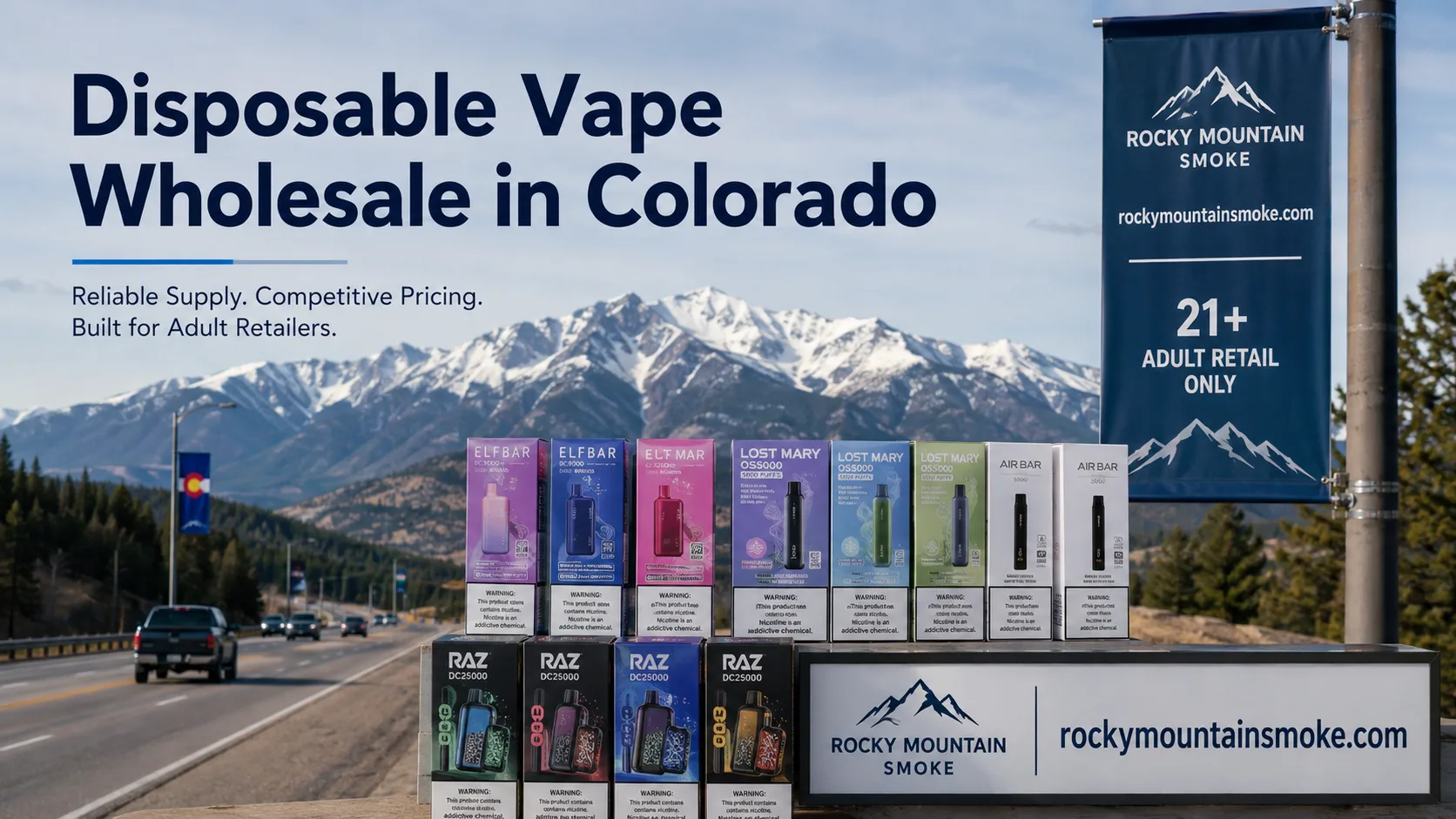
Disposable Vape Wholesale in Colorado for Licensed Adult Retailers
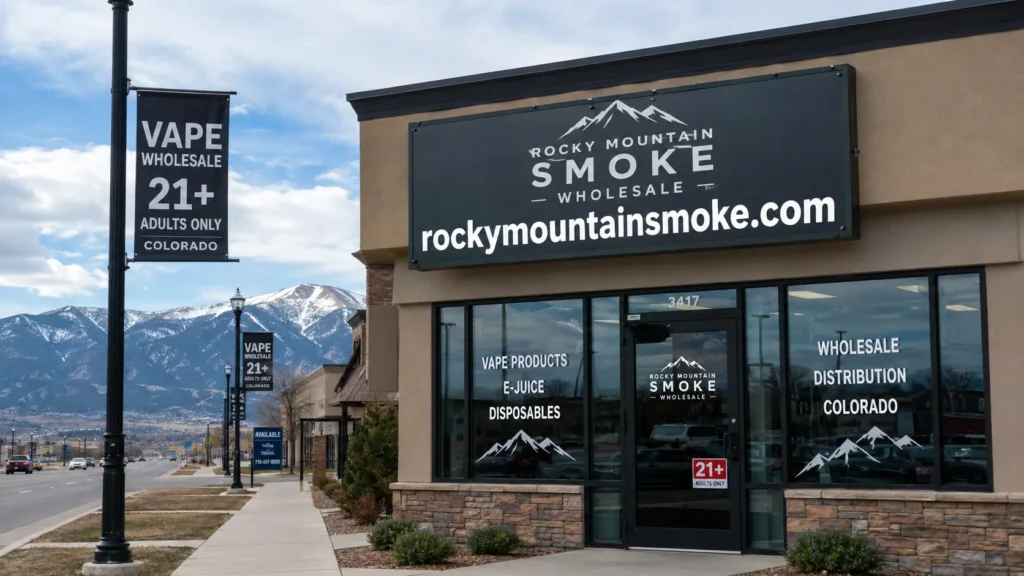
Finding a dependable source for disposable vape wholesale in Colorado involves much more than comparing case prices or selecting popular product varieties. Vape and nicotine products operate within a highly regulated market, so every retailer must consider supplier legitimacy, product documentation, age restrictions, taxation, inventory consistency, local rules, and responsible sales practices before placing a wholesale order. A professional wholesale relationship should help a store maintain reliable inventory while supporting lawful, adult-only retail operations.
Rocky Mountain Smoke serves businesses looking for a structured and responsible wholesale purchasing experience through rockymountainsmoke.com. Wholesale access should be restricted to qualified businesses, with appropriate verification completed before regulated products are supplied. This business-to-business approach helps protect retailers, wholesalers, and adult customers while supporting more transparent inventory planning.
Federal law prohibits retailers from selling tobacco products, including e-cigarettes and electronic nicotine delivery systems, to anyone under 21. FDA guidance also explains that nicotine is addictive and that new tobacco products generally require appropriate authorization before they may be legally marketed in the United States. Retailers should therefore review both the legal status of products and their own compliance obligations instead of relying solely on packaging, popularity, or supplier claims.
Why Wholesale Supplier Selection Matters
A wholesale supplier affects nearly every part of a vape retailer’s operation. Inconsistent deliveries can create empty shelves, while unclear invoices can complicate accounting and tax reporting. Poorly documented inventory may create additional regulatory exposure. Damaged packaging, short-dated products, incorrect quantities, and inconsistent stock availability can also reduce customer confidence and increase operating costs.
For these reasons, retailers searching for a Colorado disposable vape distributor should assess the full service model rather than focusing exclusively on the lowest unit price. Important considerations include business verification, invoice quality, product traceability, shipping practices, minimum-order requirements, stock accuracy, return procedures, damaged-goods policies, and customer support.
A credible wholesaler should communicate clearly about what is available, what documentation is supplied, and which purchasing conditions apply. Retailers should also confirm that the wholesaler is appropriately licensed or registered whenever required. A professional ordering process creates a clearer record of each transaction and makes it easier for businesses to manage stock, reconcile invoices, and respond to compliance questions.
Wholesale Access Should Be Limited to Qualified Businesses
Disposable vape wholesale is a business-to-business service. It should not function as a method for individual consumers to obtain regulated nicotine products at discounted prices. Before approving a wholesale account, a supplier may request information such as:
- Registered business name
- Business address
- State sales-tax information
- Relevant retail or tobacco licenses
- Authorized purchasing contact
- Store website or public business listing
- Shipping and billing information
- Confirmation that products will be sold only through lawful channels
Colorado explains that a retailer purchasing excise-tax-paid tobacco products for sale to end consumers must hold a retail sales-tax license when buying from a licensed Colorado tobacco wholesaler, distributor, or distributing subcontractor. Specific obligations can vary according to a company’s role in the supply chain, so each business should confirm its responsibilities with the Colorado Department of Revenue and qualified legal or tax professionals.
Business verification may make account approval more detailed, but it is an important feature of a responsible wholesale program. It helps separate legitimate retail purchasing from unverified consumer transactions and gives both parties a documented business relationship.
Understanding Colorado Nicotine-Product Taxes
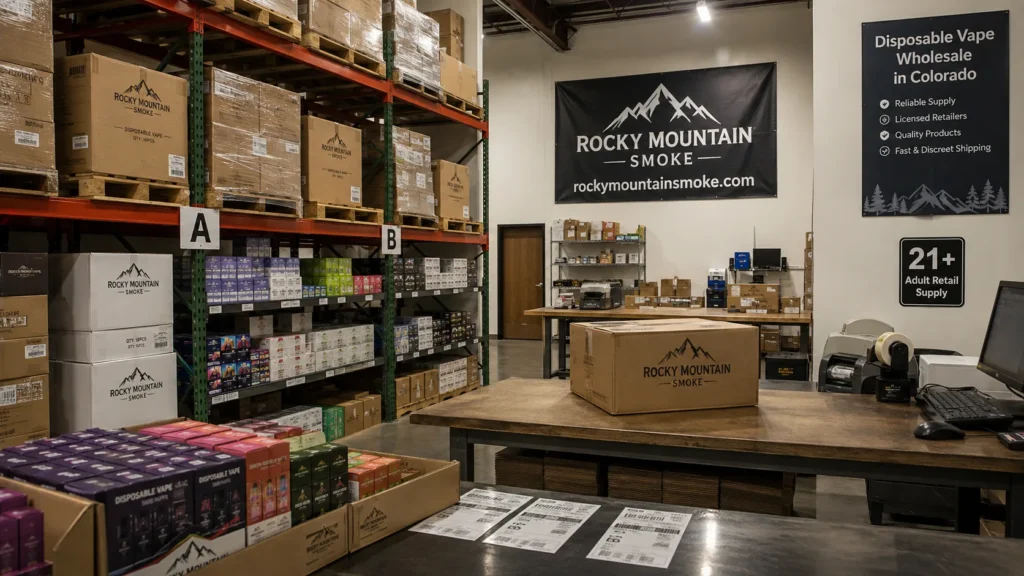
Taxes are a major part of wholesale planning. Colorado applies a nicotine-products tax based on the invoice price paid by distributors to manufacturers or suppliers. The Colorado General Assembly reports that the rate increased to 56% in July 2024 and is scheduled to increase to 62% in July 2027. Nicotine products are also subject to Colorado’s state sales tax and any applicable local or special-district taxes.
These tax obligations can affect wholesale cost, retail pricing, margins, invoice structure, and cash-flow planning. A retailer should not build pricing decisions around the advertised case price alone. The complete landed cost may include the product price, applicable excise tax, sales tax, local assessments, shipping charges, payment-processing costs, and potential handling fees.
Retailers should maintain organized invoices and transaction records. Before placing a large order, confirm whether prices include applicable taxes and which party is responsible for filing or remitting them. Because tax rules and rates can change, businesses should verify current information directly with the Colorado Department of Revenue rather than relying on an old article, social-media post, or supplier advertisement.
Federal Age Requirements for Vape Retailers
All tobacco-product retailers in the United States must comply with the federal minimum sales age of 21. This requirement covers cigarettes, cigars, smokeless tobacco, liquid nicotine, e-cigarettes, e-liquids, and other electronic nicotine delivery systems. There is no federal exemption for active-duty military personnel or veterans aged 18 to 20.
FDA regulations also increased the age threshold for photographic identification checks. Retailers should review current FDA guidance and establish a written age-verification policy for employees. Staff training should cover acceptable identification, refusal of suspicious sales, third-party purchase attempts, expired identification, and documentation of incidents.
An adult-only sales policy should be visible in stores and incorporated into staff procedures. Retailers should never use advertising, packaging displays, language, characters, or imagery designed to attract minors. Responsible merchandising is not merely a branding preference; it is an essential part of operating in a regulated market.
Local Colorado Rules May Differ
Statewide rules are only one part of the compliance picture. Colorado counties and municipalities may establish additional tobacco-retail licensing requirements, zoning restrictions, advertising rules, flavor restrictions, distance requirements, or enforcement procedures. A product that may be available under state law could still face restrictions in a particular city or county.
Before ordering inventory, retailers should check the requirements that apply at the exact store location. Businesses operating multiple stores may face different rules at different addresses. A retailer in Denver, Colorado Springs, Aurora, Pueblo, Fort Collins, Boulder, or a smaller municipality should not assume that every local jurisdiction follows an identical framework.
The Colorado Department of Public Health and Environment provides tobacco-policy resources and information concerning licensed retailers, compliance checks, and underage-sale violations. Local ordinances and licensing offices should also be consulted before a store expands its product selection.
Product Legitimacy and FDA Marketing Status
Wholesale buyers should conduct due diligence on the products they intend to stock. FDA states that new tobacco products cannot legally be marketed in the United States without authorization through an applicable pathway. Product availability in the market does not, by itself, establish that a product has received authorization.
Retailers should request clear information from suppliers and avoid assuming that attractive packaging, online popularity, or widespread distribution proves compliance. When reviewing inventory, businesses may consider:
- Manufacturer identity and contact information
- Product name and model
- Nicotine labeling
- Batch or lot identification
- Packaging condition
- Applicable warning statements
- Product documentation
- Recall or enforcement history
- FDA marketing status
- Supplier invoices and chain-of-custody records
A retailer should avoid products with unclear origins, altered packaging, missing labels, inconsistent serial information, or unsupported claims. Products should not be marketed as safe, healthy, harmless, therapeutic, or approved for smoking cessation unless such statements are specifically permitted and supported by the appropriate regulatory authorization.
What Retailers Should Evaluate Before Ordering
A successful wholesale purchasing strategy begins with the store’s actual sales data. Ordering large quantities based only on online trends may create slow-moving inventory and unnecessary financial exposure. Retailers should examine historical sales, customer demand among lawful adult purchasers, seasonal patterns, storage capacity, and local restrictions.
Inventory Availability
Consistent availability helps retailers avoid frequent product substitutions. Ask whether the wholesaler provides live inventory information, order confirmations, back-order notifications, and restock estimates.
Minimum Order Requirements
Minimum-order quantities can affect cash flow. A smaller store may benefit from manageable case requirements, while a multi-location operator may require larger volume arrangements. Retailers should understand minimum quantities before starting checkout.
Packaging and Product Condition
Every case should arrive with sealed, undamaged retail packaging. Retailers should inspect shipments promptly and document crushed boxes, leakage, missing products, incorrect items, or labeling inconsistencies.
Invoice Transparency
A professional invoice should clearly identify the seller, buyer, products, quantities, prices, taxes, shipping charges, payment terms, and transaction date. Clear documentation is especially important for regulated inventory.
Return and Damage Policies
Before ordering, review the wholesaler’s policies covering damaged shipments, manufacturer defects, incorrect quantities, refused deliveries, and unopened returns. Nicotine-product returns may be subject to restrictions, so written terms should be reviewed carefully.
Customer Support
Wholesale buyers may need help with account verification, invoice questions, delivery issues, or damaged products. A defined support process is more useful than a supplier who communicates only until payment is completed.
Inventory Planning for Colorado Vape Shops
Retail inventory should be managed through data rather than guesswork. Start by calculating average weekly unit sales for each stock-keeping unit. Compare that figure with supplier lead times and determine a reasonable reorder point.
For example, if a store sells a particular item steadily and replenishment normally takes several business days, the retailer should reorder before the remaining stock reaches the expected sales volume for that delivery period. Safety stock may be added to account for shipping delays, weather disruptions, or supplier shortages.
Retailers should avoid excessive ordering merely to reach a discount tier. A lower unit price does not produce genuine savings when inventory remains unsold, becomes damaged, falls out of demand, or is affected by a regulatory change. Purchasing decisions should balance margin with turnover.
A simple inventory system should record:
- Product name and model
- Quantity received
- Quantity sold
- Unit cost
- Retail price
- Applicable tax
- Supplier
- Invoice number
- Batch information
- Reorder level
- Damaged or returned units
Accurate records can help a retailer identify profitable inventory, reduce unnecessary stock, and maintain a traceable purchasing history.
Responsible Storage and Handling
Disposable vape products contain batteries and liquid components. They should be stored according to manufacturer instructions and kept away from excessive heat, direct sunlight, moisture, ignition sources, and unauthorized access.
Retail staff should inspect incoming products for swelling, leakage, damaged packaging, punctures, unusual odor, or signs of battery damage. Questionable products should be isolated and handled according to applicable safety procedures rather than placed on retail shelves.
Storage areas should also be inaccessible to customers and minors. Businesses should maintain clean shelving, stable temperatures, organized case labels, and first-in, first-out inventory rotation whenever appropriate.
Battery-containing products may be subject to particular shipping, disposal, and fire-safety requirements. Retailers should follow carrier instructions, manufacturer guidance, local waste rules, and fire-code requirements.
Building a Responsible Retail Environment
Wholesale inventory is only one component of a compliant retail operation. Store procedures should support responsible sales from receiving through checkout. Retailers may implement:
- Adult-only age signage
- Consistent identification checks
- Employee compliance training
- Restricted access to regulated inventory
- Incident and refusal logs
- Regular license reviews
- Local-law monitoring
- Product recall procedures
- Secure storage practices
- Responsible advertising standards
FDA conducts compliance activities involving tobacco retailers, including undercover purchase inspections. Retailers can face enforcement consequences for unlawful sales to underage purchasers. Staff should understand that compliance checks may occur without advance notice.
Training should be documented and repeated regularly. New employees should not handle regulated-product transactions until they understand the store’s verification policy and applicable legal requirements.
How to Request a Wholesale Account
Businesses interested in disposable vape wholesale in Colorado may begin by visiting rockymountainsmoke.com and reviewing the available wholesale-account process. Applicants should prepare accurate company information and any documentation required to verify that they operate a lawful business.
A typical process may involve:
- Submitting the business name and contact information.
- Providing sales-tax and licensing documentation.
- Confirming the authorized purchasing representative.
- Reviewing wholesale terms and minimum-order requirements.
- Confirming shipping eligibility and delivery information.
- Receiving account approval before accessing regulated wholesale inventory.
Account approval should not be treated as permanent permission to disregard future regulatory changes. Retailers remain responsible for maintaining valid licenses, monitoring local rules, training staff, and ensuring that every sale is made lawfully.
Why Transparent Wholesale Relationships Matter
A strong supplier relationship is based on documentation, consistency, and clear expectations. Retailers should know how prices are calculated, how taxes appear on invoices, how damaged items are handled, and whom to contact when an order problem occurs.
Wholesalers should also maintain accurate business records and avoid supplying regulated inventory through informal or unverifiable channels. Responsible distribution protects the integrity of the supply chain and helps legitimate businesses compete more effectively.
Rocky Mountain Smoke’s online presence at rockymountainsmoke.com can be used to provide wholesale information, account requirements, product availability, compliance notices, and business contact details. All website content and ordering functions should make it clear that nicotine products are intended exclusively for adults aged 21 and older and that wholesale access is restricted to qualified businesses.
Frequently Asked Questions
What is disposable vape wholesale in Colorado?
Disposable vape wholesale in Colorado refers to business-to-business distribution of disposable electronic nicotine products to qualified retailers. Wholesale transactions should comply with federal, state, and local requirements.
Can an individual customer open a wholesale account?
Wholesale accounts should be intended for legitimate businesses rather than personal consumer purchasing. Applicants may be required to submit business, licensing, and tax documentation.
What is the minimum legal age for purchasing vape products?
Federal law prohibits the sale of tobacco products, including e-cigarettes and electronic nicotine delivery systems, to anyone younger than 21.
Do Colorado retailers need a sales-tax license?
Colorado states that retailers purchasing excise-tax-paid tobacco products for sale to end consumers must have a retail sales-tax license when buying from an appropriately licensed Colorado wholesaler, distributor, or subcontracting distributor. Businesses should verify the requirements applying to their particular operations.
Are nicotine products taxed in Colorado?
Yes. Colorado imposes a nicotine-products tax, and applicable state, local, and special-district sales taxes may also apply. The exact treatment can depend on the transaction and the business’s role in the distribution chain.
Are all disposable vape products legal to sell?
Retailers should not assume that every product available through distributors or online marketplaces may be legally marketed. FDA states that new tobacco products generally require authorization before lawful U.S. marketing. Retailers should verify product status and seek professional guidance where necessary.
Can local Colorado governments impose additional restrictions?
Yes. Counties and municipalities may have licensing, zoning, flavor, advertising, or operational requirements beyond statewide rules. Retailers should check regulations for each store location.
Does vaping contain nicotine?
Most e-cigarettes contain nicotine, which FDA identifies as highly addictive. Product labels and manufacturer documentation should be reviewed carefully.
Choose a Compliance-Focused Wholesale Process
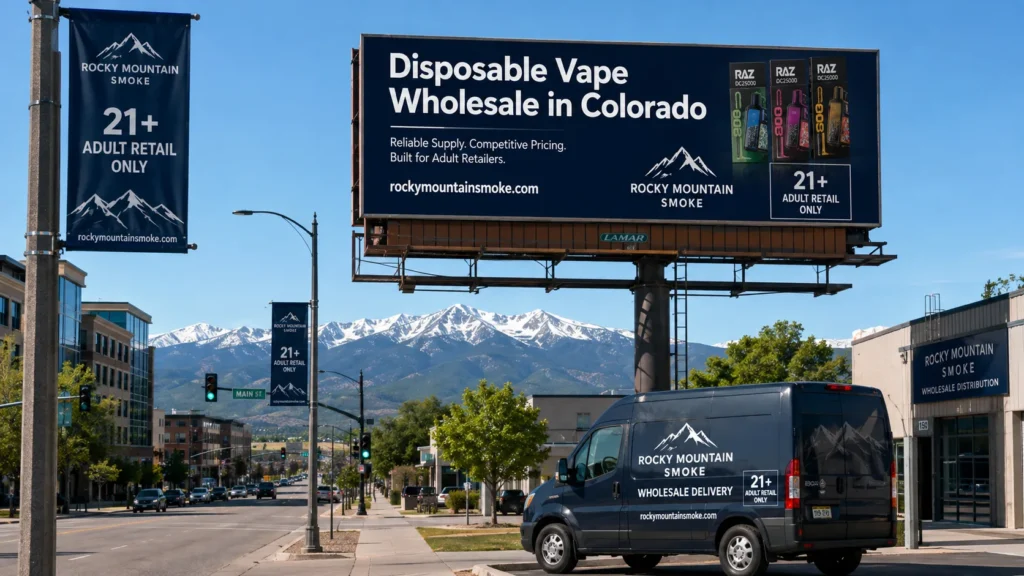
Businesses searching for disposable vape wholesale in Colorado should prioritize responsible sourcing, clear documentation, inventory consistency, tax awareness, and lawful adult-only sales. The cheapest case price is not necessarily the best wholesale decision when supplier reliability, product status, local restrictions, and recordkeeping are taken into account.
Visit rockymountainsmoke.com to review available business-account information and wholesale requirements. Before ordering or reselling nicotine products, verify all current federal, Colorado, county, and municipal obligations applicable to your business.
21+ only. Nicotine is addictive. This content is intended for licensed or otherwise qualified adult-product retailers and does not constitute legal, regulatory, or tax advice.
Disposable Vape Wholesale in Colorado