
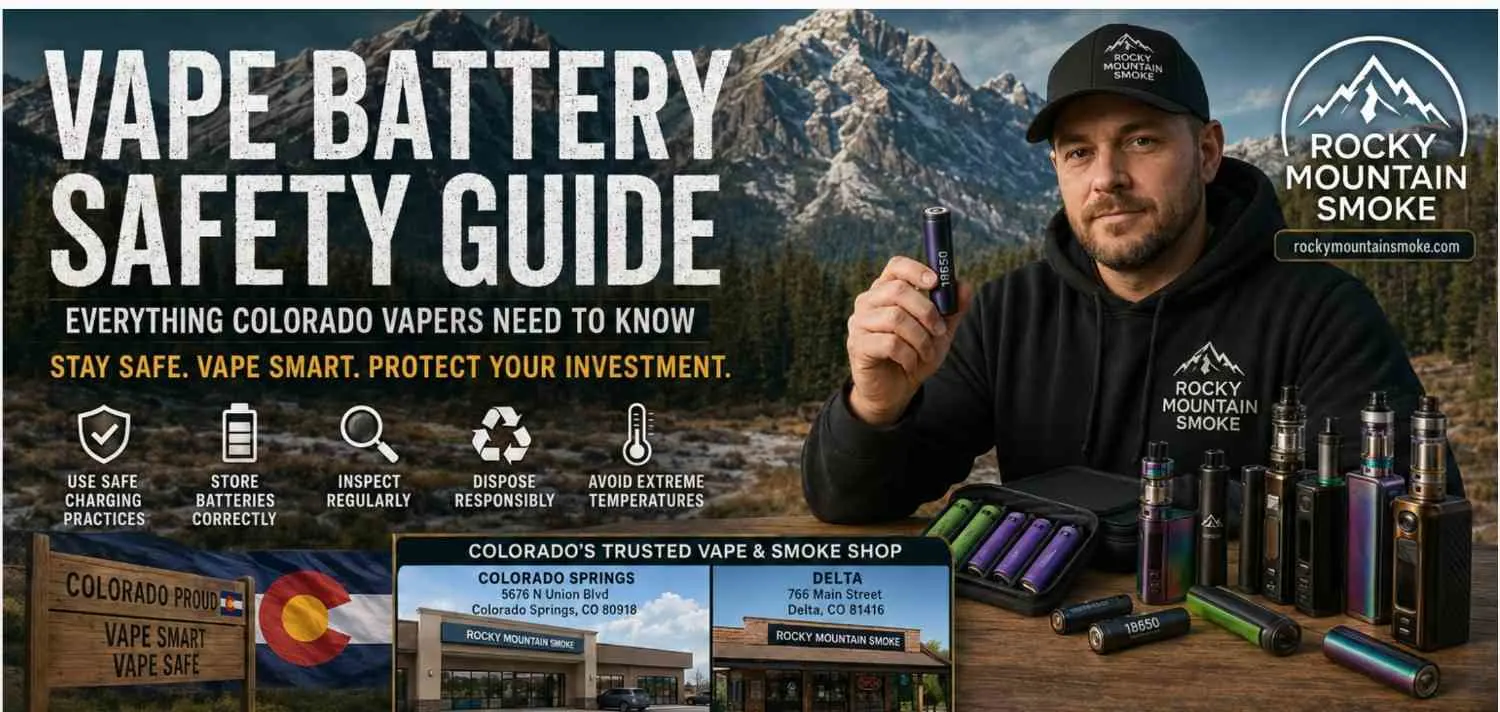
Everything Colorado Vapers Need to Know to Stay Safe, Vape Smart, and Protect Their Investment

Whether you are a longtime vaper or just starting your journey, one thing remains true across every device and every style of vaping: your battery is the most critical — and most often overlooked — component of your setup. A well-maintained battery keeps you vaping smoothly for years. A neglected or misused battery can fail dangerously, damage your device, or worse, cause a fire or physical injury. At Rocky Mountain Smoke, Colorado’s trusted vape and smoke shop with locations in Colorado Springs and Delta, he and his team work with vapers every single day — and battery safety questions come up constantly. Vape Battery Safety Guide Vape Battery Safety Guide Vape Battery Safety Guide
1. Why Vape Battery Safety Is Not Optional
Vape batteries — most commonly lithium-ion (Li-ion) or lithium polymer (LiPo) cells — store a significant amount of energy in a compact form. That energy is what makes your device powerful, portable, and long-lasting. But that same energy density means that when a battery is mistreated, the consequences can be severe. Incidents involving vape batteries make the news regularly: fires in pockets, explosions during charging, and thermal runaway events that cause burns or property damage.
The good news? The vast majority of vape battery accidents are completely preventable. They happen because of user behaviour, not unavoidable failures. This guide gives you the knowledge to eliminate nearly all risk from your vaping routine.
What Is Thermal Runaway?
Thermal runaway is the most dangerous event that can happen with a lithium battery. It occurs when heat inside the battery causes a self-reinforcing chemical reaction that produces even more heat — eventually venting gas, flames, or causing an explosion. It can be triggered by overcharging, physical damage, short circuits, or exposing the battery to extreme temperatures. Knowing how to avoid these triggers is the foundation of safe vaping.
2. Understanding Your Vape Battery: Types and Ratings
Not all vape batteries are the same, and understanding the basics of your specific battery type helps you use it correctly.
Internal vs. External Batteries
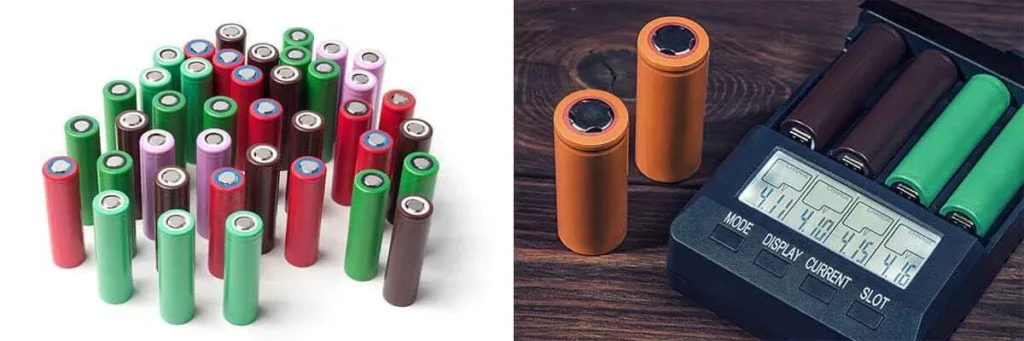
Internal batteries are built into the device and charged via a USB or USB-C port. They are convenient but have a fixed lifespan — when the battery degrades, you often replace the whole device. External batteries (typically 18650, 20700, or 21700 cells) are removable and rechargeable in a standalone charger. They give you more control, longer life, and better performance — but require more user knowledge.
Key Battery Specifications to Know
- Capacity (mAh): How much charge the battery can hold. Higher mAh = longer vaping time between charges.
- Continuous Discharge Rating (CDR / Amps): The safe maximum current draw. Always match your device’s power demands to a battery with an adequate CDR.
- Nominal Voltage: Typically 3.6V–3.7V for lithium-ion cells.
- Cut-off Voltage: The minimum safe discharge level — usually 2.5V–3.0V. Discharging below this permanently damages the cell.
⚠️ Never exceed a battery’s rated CDR. Running high-wattage builds on a battery not rated for that current draw is one of the leading causes of battery failure and fires.
3. Safe Charging Practices: The Rules That Could Save Your Home
How you charge your vape battery matters as much as the battery itself. Follow these rules without exception.
Rule 1: Never Leave Batteries Charging Unattended or Overnight
This is the number one rule in vape safety. Even high-quality batteries with good protection can malfunction. Always charge in a place where you can see the device, and remove it from the charger promptly when fully charged.
Rule 2: Use the Correct Charger
Use only the charger that came with your device or a high-quality aftermarket charger rated for lithium-ion batteries. Never use a phone charger or generic USB block without verifying compatibility. Incorrect voltage or amperage can cause overcharging and cell damage.
Rule 3: Charge at Room Temperature
Charging a battery in extreme heat or cold degrades its capacity and increases risk. Keep charging environments between 59°F and 77°F (15°C–25°C) for optimal safety and battery health.
Rule 4: Never Charge a Damaged Battery
If your battery is dented, has a torn wrapper, leaks any fluid, or has been dropped from a height, do not charge it. Bring it to Rocky Mountain Smoke for a safe inspection or responsible disposal.
Rule 5: Stop at 80–90% for Daily Use
For batteries you use every day, consistently charging to 100% accelerates degradation. Keeping your battery in the 40%–90% range significantly extends overall lifespan. Only charge to full when you need maximum range for the day.
4. Battery Storage: Doing It Right
Improper storage causes as many battery problems as improper use. These guidelines keep your batteries safe whether you are storing them for a weekend or a few months.
Short-Term Storage (Days to Weeks)
- Store at 40%–60% charge — never fully drained, never fully charged.
- Keep in a cool, dry location away from direct sunlight.
- Store batteries away from metal objects like keys or coins, which can create short circuits.
Long-Term Storage (Months)
- Charge to approximately 50% before storing.
- Check and top up the charge to 50% every 3–4 months.
- Use a proper battery case — never lose it in a drawer, bag, or pocket.
- Store in a fireproof container if possible, especially for multiple cells.
The Battery Case Rule
This one is non-negotiable: always carry spare batteries in a hard-sided protective case. Loose batteries in a pocket with keys, change, or other metal objects are a recipe for a short circuit, which can cause severe burns. Battery cases cost just a few dollars and are available at Rocky Mountain Smoke at both locations.
5. Spotting a Bad Battery: Warning Signs Every Vaper Must Know
Your battery communicates its condition through physical and performance cues. Learn to read them.
Physical Warning Signs
- Wrapper is torn, cracked, split, or has holes — replace immediately.
- The battery is dented, crushed, or deformed in any way.
- Visible corrosion, discolouration, or rust on the terminals.
- Battery leaks any liquid or releases any unusual odour.
- Battery appears swollen or bloated — this is a critical warning sign.
Performance Warning Signs
- Significantly reduced runtime between charges compared to when the battery was new.
- The device fires inconsistently or produces weak vapour even on a full charge.
- Battery gets unusually hot during normal use (mild warmth is normal; burning hot is not).
- The device reads an unusual voltage even when the battery is freshly charged.
If you notice any of these warning signs, stop using the battery immediately. Bring it into Rocky Mountain Smoke at either the Colorado Springs or Delta location, and one of the knowledgeable staff members will help you assess whether it can be rewrapped, needs safe disposal, or should be replaced.
6. Battery Wraps: Small Detail, Big Safety Difference
The outer PVC wrap on an external battery is not just cosmetic — it is an electrical insulator. If the wrap is damaged, the bare metal body of the battery becomes exposed, which can cause short circuits when the battery contacts metal surfaces inside your device or in your pocket. A torn wrap can turn a perfectly good battery into a serious hazard.
Rewrapping vs. Replacing
Minor wrap damage (small tears or splits near the top) can be repaired with battery wrapping kits, which are inexpensive and available at Rocky Mountain Smoke. However, if the battery itself shows any physical damage beyond the wrap, replacement is always the safer choice. Do not try to repair a physically damaged cell — retire it and recycle it properly.
7. Choosing the Right Battery for Your Device
Matching your battery to your device is one of the most overlooked aspects of vape safety — and one of the most important.
Step 1: Know Your Device’s Wattage Range
High-powered sub-ohm setups demand more current than basic vape pens. If your device runs at 80W or higher, you need a battery rated to handle that current draw safely.
Step 2: Calculate Required CDR
Use Ohm’s Law as a basic guide: Amps = Watts ÷ Volts. At 80W with a fully charged 4.2V battery, that is roughly 19 amps. Your battery’s CDR rating should comfortably exceed your device’s peak demand — always leave a safety margin.
Step 3: Buy from Reputable Sources
Counterfeit batteries are a real problem in the vape market. Batteries purchased from unknown online sellers, unauthorised marketplaces, or suspiciously cheap sources may be re-wrapped with lower-quality cells with falsified ratings. Always buy batteries from a trusted, established vape shop like Rocky Mountain Smoke, where you can be confident in the authenticity and quality of what you are purchasing.
8. Battery Disposal: Protect Colorado’s Environment
Lithium-ion batteries should never be thrown in the trash. They are classified as hazardous waste and can cause fires in landfills or recycling facilities. Colorado has several responsible battery recycling options.
How to Dispose of Vape Batteries Responsibly
- Bring spent batteries to Rocky Mountain Smoke — the team is happy to assist with responsible disposal.
- Use Call2Recycle drop-off locations (available at major hardware and electronics retailers across Colorado).
- Check with your local municipal waste authority for hazardous waste collection events in Colorado Springs or Delta.
When transporting batteries for disposal, cover the terminals with tape to prevent short circuits, and place each battery in its own individual bag or case.
9. Temperature, Colorado, and Your Vape Battery
Colorado’s climate presents unique battery challenges that vapers in other states do not always consider. High-altitude cold winters, hot summer days on the Eastern Slope, and dramatic temperature swings throughout the day all affect battery performance and safety.
Cold Weather Vaping
- Cold temperatures reduce battery output, making your device feel sluggish or weak.
- Avoid leaving your device in a cold car overnight — batteries discharged in extreme cold can be permanently damaged.
- Warm your device to room temperature gradually before use — never apply direct heat.
Hot Weather Vaping
- Heat accelerates battery degradation and can, in extreme cases, trigger thermal runaway.
- Never leave your device in a hot car, especially during Colorado summers.
- If your device feels hot to the touch after sitting in the sun, let it cool before use.
10. Building a Safe Vaping Routine: Daily Habits That Matter
Safety does not require major effort — it is built from small, consistent habits practised every day.
- Inspect your battery briefly each time you use it — check the wrap, feel the weight, note any changes.
- Check the charge level before putting your device in your pocket to ensure it will not auto-fire.
- Enable device safety locks (most modern devices have a 5-click lock function) before carrying.
- Store your device upright when not in use to prevent e-liquid from flooding the coil and potentially reaching the battery.
- Replace batteries proactively — most quality batteries perform well for 300–500 full charge cycles. After that, capacity and safety begin to decline noticeably.

Why Colorado Vapers Trust Rocky Mountain Smoke
Rocky Mountain Smoke is not just a store — it is a resource for the Colorado vaping community. Whether you are looking for a new device, trying to troubleshoot an issue, or just want honest advice about which battery works best for your setup, the knowledgeable team is here to help. With two conveniently located Colorado stores — one in Colorado Springs and one in Delta — Rocky Mountain Smoke serves vapers across the Front Range and Western Slope with the products, knowledge, and personalised service that online retailers simply cannot match.
Stop in, ask questions, and vape safely. That is what Rocky Mountain Smoke is here for.
Visit Rocky Mountain Smoke — Two Colorado Locations
📍 Colorado Springs: 5676 N Union Blvd, Colorado Springs, CO 80918
📍 Delta: 766 Main Street, Delta, CO 81416
📞 Phone: +1 (970) 307-9137
📧 Email: info@rockymountainsmoke.com
🌐 Website: rockymountainsmoke.com
Frequently Asked Questions About Vape Battery Safety
Q: How do I know when my vape battery needs to be replaced? Replace your battery when you notice significantly reduced runtime, inconsistent device performance, physical damage to the cell or wrapper, or unusual heat during normal use. Most batteries should be replaced after 300–500 full charge cycles, or roughly 12–18 months of daily use.
Q: Can I charge my vape battery with any USB charger? No. Always use the charger supplied with your device or a charger specifically rated for lithium-ion batteries. Generic USB blocks may deliver incorrect voltage and cause overcharging, which degrades the battery and creates a safety risk.
Q: Is it safe to charge my vape battery overnight? It is not recommended. Even batteries with overcharge protection can experience issues if left unattended for extended periods. Charge during waking hours when you can monitor the device and remove it from the charger promptly at full charge.
Q: What should I do if my vape battery gets hot? If your battery becomes uncomfortably hot during normal use, stop using it immediately. Set it down on a non-flammable surface away from flammable materials. Do not put it in your pocket or a bag. Let it cool fully, then inspect it for damage. If it heats abnormally, retire it and bring it to Rocky Mountain Smoke for evaluation.
Q: How should I carry spare vape batteries when I am out? Always use a hard-sided battery case. Never carry loose batteries in a pocket or bag with metal objects — this can cause a dangerous short circuit that generates intense heat and may cause serious burns.
Q: Where can I recycle old vape batteries in Colorado? Rocky Mountain Smoke accepts batteries for responsible disposal at both locations. You can also use Call2Recycle drop-off points at hardware stores and electronics retailers throughout Colorado Springs and Delta.
Q: Does cold weather affect my vape battery? Yes. Cold temperatures reduce battery output and, in extreme cold, can permanently damage cells. Avoid leaving your device in a cold car overnight. If your device has been in the cold, let it warm to room temperature gradually before using or charging.
Q: What does CDR mean on a vape battery? CDR stands for Continuous Discharge Rating and is measured in amps. It represents the maximum continuous current your battery can safely provide to your device. Always use a battery with a CDR that meets or exceeds the maximum power draw of your device.
Q: Are the batteries sold at Rocky Mountain Smoke authentic? Yes. Rocky Mountain Smoke sources products from reputable suppliers and does not carry counterfeit or re-wrapped cells. Buying from an established local shop like Rocky Mountain Smoke gives you confidence in the authenticity and quality of your batteries.
Q: Can I use any 18650 battery in my vape mod? Not all 18650 batteries are equal. You need to match the battery’s CDR to your device’s power demands. A battery with a low CDR used in a high-wattage device is a safety hazard. The team at Rocky Mountain Smoke can help you find the right cell for your specific setup.

Safe Vaping Is Smart Vaping
Battery safety is not complicated, but it requires consistent attention and good habits. By understanding your battery, charging it correctly, storing it properly, and recognising the warning signs of a failing cell, you eliminate virtually all risk from your vaping experience. Rocky Mountain Smoke is committed to helping every Colorado vaper vape safely, confidently, and enjoyably — whether you shop online at rockymountainsmoke.com or visit one of the Colorado stores in person. Stay safe, stay informed, and enjoy every puff.
© Rocky Mountain Smoke | rockymountainsmoke.com | Colorado’s Trusted Vape & Smoke Shop
Vape Battery Safety Guide Vape Battery Safety Guide Vape Battery Safety Guide. Vape Battery Safety Guide Vape Battery Safety Guide Vape Battery Safety Guide Vape Battery Safety Guide Vape Battery Safety Guide Vape Battery Safety Guide Vape Battery Safety Guide Vape Battery Safety Guide Vape Battery Safety Guide Vape Battery Safety Guide Vape Battery Safety Guide Vape Battery Safety Guide Vape Battery Safety Guide Vape Battery Safety Guide Vape Battery Safety Guide Vape Battery Safety Guide Vape Battery Safety Guide Vape Battery Safety Guide Vape Battery Safety Guide Vape Battery Safety Guide Vape Battery Safety Guide Vape Battery Safety Guide